
Category — Bad Water
Could you live on less than three gallons of water a day?
What do you think of when you hear the words “water slavery”? Do you imagine women or girls spending hours a day fetching water for their families? We’ve all seen the pictures – women with jerry cans, lined up at the village well. We know these treks to distant sources are physically grueling and so time consumptive that they rule out any possibility of getting an education or of furthering any other sort of personal development.
But you won’t know how bad water slavery can be until you read Tina Rosenberg’s piece in the April National Geographic, a special issue devoted to fresh water. Rosenberg describes the life of Aylito Binayo, who leaves the southern Ethiopian village of Foro every morning before dawn (she leaves her two youngest children in the care of her four-year-old), clambers nearly an hour down a steep and treacherous mountain path to a manure-dappled puddle along a filthy river. She laboriously fills two jerry cans with unsafe water, ties one to her back with coarse rope, and hauls this fifty-pound load uphill on her back. (At one point in the story, she carries both cans of water – a hundred pounds.) Binayo, who lives on less than three gallons of water a day and washes her clothes once a year, spends the rest of her day cooking, cleaning, looking after her three children, tending the family vegetable plot, gathering grass for her goats, drying grain and carrying it to the mill for grinding — and making two more round trips for water. Some women in her village make five trips a day: two of them devoted to procuring water to make beer for their husbands.
I read this piece three times, flabbergasted. (And yes, flashing on a Monty Python sketch: “We used to have to get up at 7:00 at night, half an hour before we went to bed, eat a lump of dry poison, work 280 hours down mill, and when we got home our dad would slice us in two with a bread knife and dance upon our graves singing ‘Alleluia.’”)
Is it not 2010? Do we not live in a world with hundreds of celebrity-endorsed water charities and NGOs working on a problem universally recognized as dire, deplorable, and solvable? And it’s not as if the solutions are prohibitively expensive: in the documentary Flow, the Pacific Institute‘s Peter Gleick says, “The World Bank knows how to spend a billion dollars in one place. They don’t know how to spend a thousand dollars in a million places….Yet in many places what we need [has] a thousand-dollar answer.”
As Rosenberg reports, about half of water schemes fall into disrepair soon after their sponsors move on. “Sometimes technology is used that can’t be repaired locally, or spare parts are available only in the capital.” A 2007 survey of Binayo’s district, Konso, found that only 9 of 35 built water projects were functioning. (The group WaterAid is currently reviving some of those projects.) I could go on and on. But read Rosenberg’s piece, and spread the link around.
March 19, 2010 3 Comments
Duhigg strikes again
When I started this blog, I also started a companion site called Bad Water. It was mostly an exercise in data collection, recording boil-water alerts across the nation. I was trying to make a point: our infrastructure needs help. We have more than 300,000 water-main breaks a year in this country (breaks trigger boil-water notices, which many people interpret to mean “buy water”), and the government estimates it will take more than $300 billion (B!) over the next twenty years to repair the clean drinking water part alone, never mind the pipes that convey sewage.
But there were too many boil-water alerts to keep track of, especially in the winter months when pipes freeze and burst, and so I gave up the domain. (Turns out the feds do this better and more efficiently than I could: visit FEMA’s National Situation Update for daily reports on earthquakes, flooding, major pipe breaks, and disastrous weather.)
Today in The New York Times, Charles Duhigg has another great piece on the nation’s water supply, this time on water-main breaks. Duhigg reminds us that people pay attention to infrastructure only when it fails, that rate hikes are wildly unpopular (meanwhile, people shell out >$100 a month for cell phones and cable tv), and that we’ll continue to pay the price — burst pipes, toilets that don’t flush, possibly fires that don’t get put out — unless we face the music. (Americans, by the way, pay among the lowest water rates in the world.) Maybe in another article Duhigg will look at other sources of funding – more from the feds, more from major water polluters, more from big water users, and passage of a Clean Water Trust Fund (read the Government Accountability Office’s report on how a trust fund might work here).
The article focuses on George S. Hawkins, a lawyer with no utility experience who was brought in to head Washington’s Water and Sewer Authority. My favorite line: “When the Water and Sewer Authority needed a new leader, board members wanted someone familiar with public relations campaigns.” So far, his campaign isn’t working. Sure, fixing the pipes is going to hurt, but what choice do we have? Rain falls from the sky for free, but cleaning up that water and delivering it, isn’t cheap.
March 15, 2010 2 Comments
Pondering the Peepoo
The New York Times recently had a story about a plastic bag, called the Peepoo, that’s being marketed as a toilet for slum dwellers and others without proper sanitation (similar to the Wagbag, used by hikers in state and national parks that no longer maintain high-elevation privies; WAG =Waste Alleviation and Gelling). Once used, the Peepoo “can be knotted and buried, and a layer of urea crystals breaks down the waste into fertilizer, killing off disease-producing pathogens found in feces.”
The story raised all kinds of questions that it didn’t answer: why would people who already go in bags bother to bury them? And where is this open land that will absorb all these compostable bags? How long do they take to compost? Aren’t we supposed to be moving away from single-use disposable consumer goods and toward truly sustainable solutions? The company’s website answered some of my questions. But I wanted to know what Rose George, author of the outstanding The Big Necessity: The Unmentionable World of Human Waste and Why It Matters (one of my favorite books of the last couple years), had to say.
“I am in favour of private, market-based solutions, because humans are complicated and often if they are given things for free, they won’t love them enough,” Rose wrote to me. “Trite but true, and the reason there are millions of subsidised, unused latrines all over the world. … I also salute the fact that [the PeePoo is] cheap, and priced the same as a plastic bag, but you don’t need to buy plastic bags as often as you need the toilet, do you, so I’m not sure how powerful that argument actually is. And after all, you’re still shitting into a bag. No-one really wants to do that. So it is a stopgap solution, but the better solution would be the one that figures out how to provide sustainable sanitation – communal toilets, perhaps – in disparate, fragmented slum areas with no land tenancy, no electricity and no prospect of infrastructure.”
Sanitation hasn’t been a central focus for me, but toilets exist at one of the intersections of waste and water (I spent two chapters on my personal post-flush in Garbage Land and wrote a bit about the discharge of sewage into waterways in Bottlemania). As Rose often points out, charities are perfectly comfortable talking about the millions who die each year from water-related diseases, but what they’re really talking about are diseases linked to the presence of shit in their water. Adequate sanitation — toilets or a proxy — is just as important as access to clean and affordable drinking water. After all, new pipes and spigots won’t be worth much if source water is contaminated by human waste.
March 10, 2010 No Comments
Fashion or necessity: bottled water in the developing world
The Times (U.K.) has a business piece today on the growth of the bottled-water market in India, China, and the Middle East. Sales in the U.S. and western Europe are down, but huge growth (between 18 and 25 percent in the next three years) is expected in places where a) the tap water is bad (that is, insufficiently treated to remove bacteria and industrial and agriculture contaminants) and b) the middle class is growing to the point where bottled-water is seen – as it once was in the U.S. — as a status symbol.
The article concludes with a quote from Simon Powell, head of sustainability research for the brokerage firm CLSA: “It is so striking how the EU and US consumer have abandoned bottled water. Two years ago, if you asked for tap water in a restaurant, you’d practically be shown the door. Now, it’s the done thing. As bottled water emerges as a growth area in the developing world, investors are constantly going to find themselves underestimating the fashions involved.”
December 17, 2009 1 Comment
More bad water
The Times, as part of its ongoing water series, had a devastating front-page feature on Clean Water Act violations and contaminated drinking water yesterday. Read it for yourself; it’s chock full of slams against the EPA for lax regulation and utility managers for under-reporting violations, looking the other way, and slapping hands that should have been chopped off. (Read the comments too – there are many gems among the more than 400.)
A couple thoughts: Just because industry violates the Clean Water Act with unlawful dumping doesn’t mean a utility isn’t cleaning up the drinking water it serves to customers (the featured family, with rotting teeth and rashes from bath water, drank from a private well). Run water through enough money, they say, and you can filter anything out (no, it’s not an excuse to pollute — the less bad stuff that goes in, the less money we need to spend taking it out. But how far will ratepayers go to remove industrial pollutants? What ever happened to polluter pays?) The story also doesn’t quantify how many of the drinking-water violations were for illegal levels of contaminants versus violations of reporting requirements. (Then again, operators who fail to report test results or file other paperwork often have something to hide.) The story’s bottom line: inadequate funding threatens our municipal water supplies. Watersheds are unprotected (not enough state inspections, enforcement, or spine), pipes are breaking, underfunded treatment plants are failing to remove contaminants.
Finally, I just want to say thank dog for the New York Times, a free (and adequately funded) press, and the Freedom of Information Act. Double my subscription.
September 14, 2009 1 Comment
Another gift to the bottled-water industry
The New York Times ran a front page story yesterday on atrazine in drinking water (part of its series on worsening water pollution) and the state of federal tap-water regulation of this super-common weed killer (not good). The chemical is worrisome because of its ubiquity, its links with birth defects and low birth weights, and because it may have effects at levels lower than those previously suspected. (U.C. Berkeley’s Dr. Tyrone Hayes, who correlated low-level atrazine exposure to deformities like extra legs in frogs, was absent from the Times story. You can read about his research in this article I did for Discover.)
The Times story reminds us that new chemicals appear faster than old ones are being tested, testing is often performed by manufacturers themselves, and mixture effects are difficult to sort out. The thing is, testing drinking water for every possible chemical of concern is extremely expensive, especially at lower and lower concentrations (parts per billion, parts per trillion). If a utility finds a chemical of concern, removing it can be enormously expensive (is this an argument for cleaning up only the small percentage of water we drink??). And after you remove a chemical like atrazine–using powdered carbon, for example–what do you do with it? The utility manager I interviewed in Kansas City said he dumped it back into the river from which it came.
I predict that learning more about low-dose effects of ubiquitous chemicals (perchlorate, MTBE, trichloroethane, perfluorochemicals — all of which have been found in municipal water supplies) will give even committed tap-water drinkers pause. The Times says, “Sometimes, the only way to avoid atrazine during summer months, when concentrations tend to rise as cropland is sprayed, is by forgoing tap water and relying on bottled water or using a home filtration system.” If I were living in farm country and pregnant, nursing, or the mother of a young child, I’d certainly get the best filter I could afford and be sure to use it during spring runoff.
The anti-bottled water groups, which have raised awareness of the products’ environmental footprint and helped to drive down sales of bottled water for the first time in five years, acknowledge that all tap water isn’t perfect and try to steer the public toward filters. But I’ve always found them a bit too trusting of municipal water supplies, which vary enormously across the country. I wrote an entire book on the pros and cons of both bottled and tap water (the just-released-in-paperback Bottlemania: Big Business, Local Springs, and the Battle over America’s Drinking Water) and was surprised by how complicated the matter is and how local the issue. I realized, too, that living in New York City I was guilty of a certain arrogance — the arrogance of the well-watered –and that ditching bottled water isn’t so easy when you can’t, or shouldn’t, drink what’s coming from the tap.
Still, bottled water isn’t a good long-term solution to our water problems. It’s too expensive, and its environmental costs are too high. Instead, we must fix our municipal systems — upgrade treatment plants to remove contaminants, repair and lay new pipes to deliver water and, most important of all, better protect our watersheds from chemical and other pollution (this includes limiting deforestation and development). This past July, Oregon Congressman Earl Blumenauer introduced legislation to establish a $10 billion annual water trust fund that will, according to his website, “be financed broadly by small fees on such things as bottled beverages, products disposed of in wastewater, corporate profits, and the pharmaceutical industry. . . . The $10 billion annual fund will create more than 250,000 jobs.”
I don’t know if the legislation will pass, but I do know that we don’t really have a choice about whether or not to protect (and improve) municipal water supplies. We’re talking about water here – the stuff of life! Yes, people of means won’t have a problem importing privately bottled “pristine” drinking water (so long as that water – and the oil to pump and transport it – lasts), but the vast majority of us can’t afford this and won’t.
What can you do? Demand to know what’s in your water, do independent testing at the tap, and contact your utility and elected representatives if you don’t like what you’ve found. Then get yourself a good filter (this site will help you pick one) and a reusable bottle and reach out to your local watershed protection group to offer your support.
August 24, 2009 3 Comments
Nonstick chemical sticks around – in drinking water
Science News reports on perfluorooctanoic acid (aka PFOA or C8) in drinking water. The chemical, used to make stain-resistant textiles and nonstick pans, was in two thirds of some 30 public water systems sampled by New Jersey’s DEP; it exceeded a safety limit determined by the researchers (the EPA doesn’t regulate it); drinking water treatment plants don’t remove the chemical; the chemical concentrates in the blood; and the chemical and its analogs “bind to and activate the estrogen receptor. In trout, this estrogen action promotes the development of liver cancer.”
May 13, 2009 No Comments
Bluewash: Dasani and the Dead Zone
Last March, Dasani announced it would sponsor Alexandra Cousteau’s round-the-world Expedition: Blue Planet, intended to bring attention to water issues. The granddaughter of famed marine explorer Jacques-Yves, Cousteau recently fetched up in New Orleans (you can read about it here), where she toured hurricane ravaged neighborhoods and spoke with shrimpers and fishermen about the Gulf’s Dead Zone, which now covers more than 8,000 square miles.
Why would Dasani, one of the nation’s top-selling bottled water brands, sponsor such a trip? Because its parent company, Coca Cola, is a vast consumer of fresh water, and it’s in a p.r. hole, water wise. (You can read about the company’s abuse of groundwater and local communities that depend on that water here.) Last year Coca Cola partnered with the World Wildlife Fund to improve its water efficiency and, not incidentally, clean up its image .
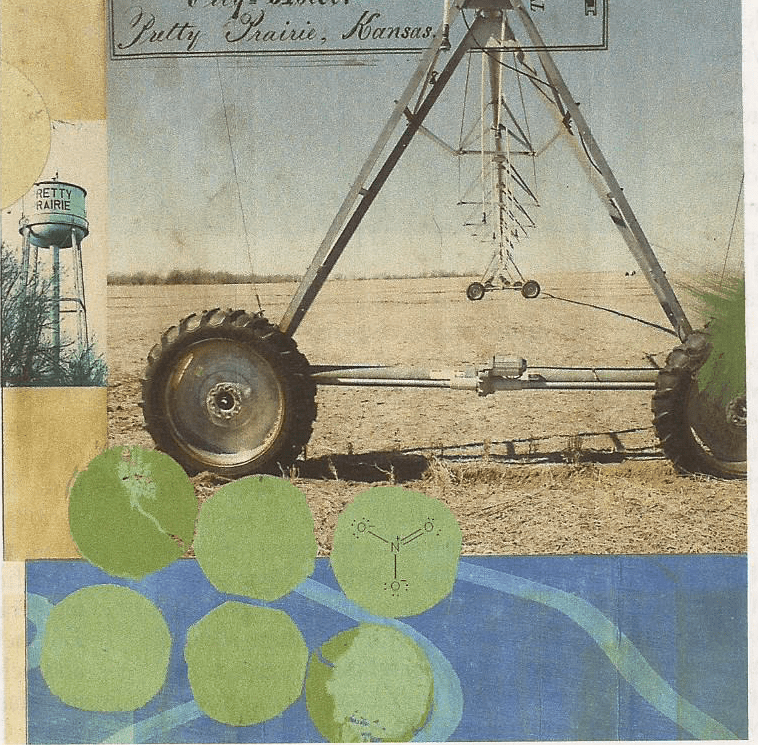
What’s the connection between Dasani and the Dead Zone? I’ll admit there’s one degree of separation, but it takes vast amounts of high fructose corn syrup to make so many Coke products –sodas, teas, and sports drinks (no, not bottled water – thank goodness). The modern variety of corn is one of the most environmentally destructive crops you can grow: it needs lots of water and lots of fertilizer. Nitrogen (from the fertilizer) runs off those fields and into groundwater and streams, which lead to the Mississippi. The nitrogen contributes to algal blooms which, as they decompose, deplete the water of oxygen. Voila: dead zone. And then there’s all the empty Dasani (and other) plastic bottles, which blow around and roll downhill into waterways and out into the ocean. You all know about the garbage patch by now, don’t you? Apparently, there may be six garbage patches in six different oceans.
Some folks think a switch to plastic bottles made of corn will be an environmental good, but growing more corn for throwaway packaging (we still lack the infrastructure to compost those corn bottles) would surely be a water bad.
May 12, 2009 1 Comment
Chemicals from food wrappers can migrate into food
Environmental Science & Technology reports on new findings that chemicals in food wrappers can migrate into food and convert, in human blood, to perfluorochemicals (also known as C8, a chemical used by DuPont to make Teflon and other nonstick and nonstain products; C8, which is on the EPA’s contaminant candidate list, contaminates drinking water in numerous communities).The ES&T link brings you to an abstract; you can read the Charleston Gazette’s summary of the report here. And you can read about a possible EPA conflict of interest on C8 here.
May 1, 2009 No Comments
Less space shelf for bottled water at Wal-Mart
According to this Reuters story, Wal-Mart may have cut back, by as much as fifty percent, on shelf space for Aquafina and Dasani, the Pepsi and Coke water brands. As growth in the bottled water market slows, Wal-Mart is pushing lower-priced brands (like its own). Cott soft drinks may fill up some of that shelf-space too.
April 18, 2009 1 Comment


Elizabeth Royte is the author of